
Most people don’t wake up one day and think, “I should look into investigation services.”
It usually starts with something small. A weird message. A missed call. A situation that doesn’t sit right.
I’ve seen this pattern again and again—people wait, second-guess themselves, and then finally decide to act. And when they do, they expect quick answers.
That’s where things have changed—a lot.
These days, when someone looks for a professional investigator in Atlanta, they’re not just looking for experience. They expect speed. Clarity. Results. And honestly, technology has raised those expectations.
The Shift: It’s Not Just “Watching” Anymore
Let’s drop the movie version of investigations for a second.
No one is just sitting in a car all day with binoculars anymore. That still happens, sure—but it’s not the main thing.
Now, investigation services in Atlanta are more layered. There’s digital work, data tracking, and then the usual on-ground stuff.
And here’s the truth:
When this mix is done right, it works really well. When it’s not… it creates confusion fast.
1. Surveillance Is Smarter (But Not Foolproof)
Surveillance is still a big part of most cases. But now it’s sharper.
Clearer cameras. Better timing. More angles.
What usually works:
Watching patterns, not random moments
Staying patient instead of chasing everything
Using tech to support decisions, not control them
What often fails:
Over-recording everything
Getting too confident with gadgets
Ignoring simple human behavior
My take:
Good surveillance isn’t about having more footage. It’s about knowing what actually matters. Most people get that wrong.
And yeah, surveillance services in Atlanta have improved—but they’re not foolproof.
2. Digital Clues Are Everywhere (Sometimes Too Much)
People leave a trail online. That’s obvious.
Social media, location tags, browsing habits—it all adds up.
But here’s where things get tricky.
What usually works:
Looking at consistent behavior over time
Connecting online activity with real-world actions
Double-checking everything
What often fails:
Jumping to conclusions from one post
Misreading tone or context
Trusting screenshots too easily
Quick reality check:
Digital info is helpful, but it’s not the full story. It can point you somewhere—but it can also mislead you if you’re not careful.
3. Things Move Faster Now (But Not Always Better)
Speed is the biggest difference.
You get updates quicker. Data comes faster. Things move.
Sounds perfect, right?
Not always.
What usually works:
Faster communication
Quick access to records
Less waiting around
What often fails:
Rushing decisions
Acting on half-checked info
Skipping proper verification
If you plan to hire an investigator in Atlanta, don’t just ask how fast they work. Ask how careful they are.
Fast answers are useless if they’re wrong.
4. Evidence Is Stronger (When Done Right)
This is one area where technology really helps.
Clear videos. Time stamps. Digital logs.
Harder to argue with.
What usually works:
Clean, clear evidence
Multiple pieces backing the same claim
Proper timing
What often fails:
Bad-quality footage
Missing context
Evidence that doesn’t connect properly
Personal opinion:
One solid piece of evidence beats ten weak ones. Always.
5. It’s More Discreet Now (Mostly)
People always ask this—“Will anyone find out?”
Short answer: less likely than before, but not impossible.
What usually works:
Keeping distance
Changing patterns
Using smaller, less obvious tools
What often fails:
Repeating the same approach
Getting too close
Thinking you can’t be noticed
Discretion is better now, sure. But it still depends on how smart the approach is.
6. Technology Helps—But It Doesn’t Think
This is probably the biggest misunderstanding.
People assume better tools = better results.
That’s not how it works.
What usually works:
Using tools to confirm suspicions
Adjusting based on real situations
Combining tech with experience
What often fails:
Blind trust in data
Ignoring instincts
Treating every case the same
At the end of the day, tools don’t solve problems. People do.
A Situation That Happens More Than You Think
A business owner suspects something’s wrong internally.
Old way? Watch everyone. Wait for a mistake.
Now?
Look at patterns first
Focus on specific individuals
Use targeted surveillance
It saves time. Less chaos.
But only if done properly. Otherwise, it just creates noise.
What This Means for You
If you’re considering investigation services in Atlanta, don’t expect magic.
Things are better, yes. Faster too.
But results still depend on how the work is done.
Technology helps. It doesn’t guarantee anything.
A Simple Way to Think About It
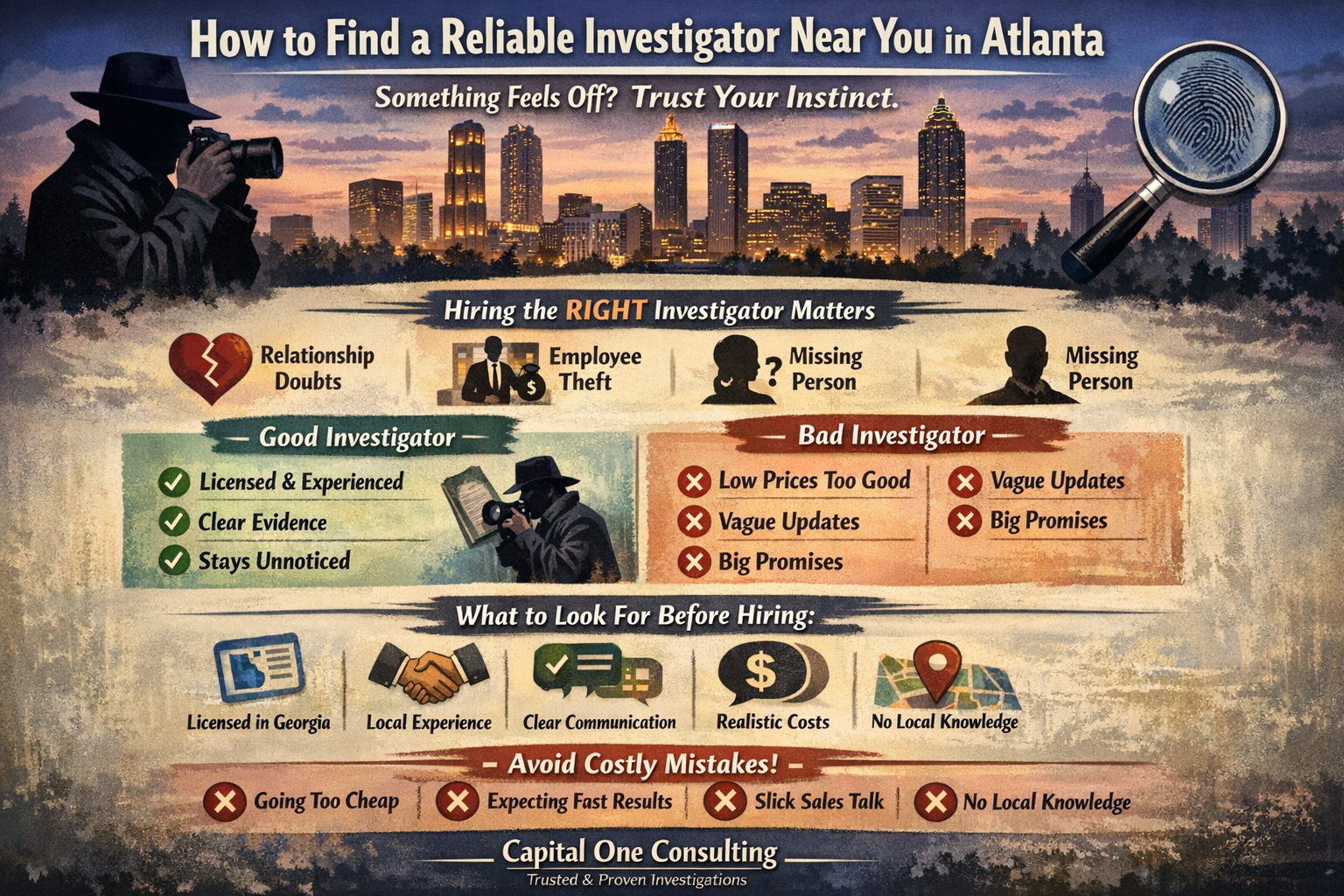
If you’re stuck, here’s what usually makes sense:
Be honest about the situation
Don’t try to handle it yourself
Ask practical questions, not fancy ones
Avoid anyone promising instant answers
Focus on clarity, not speed
Simple, but it works.
Where It Usually Goes Right
From what I’ve seen, firms like Capital One Consulting try to keep a balance.
Not too old-school. Not too tech-heavy.
That middle ground is where most cases actually work out.
Key Takeaways
Technology helps, but it’s not perfect
Surveillance works best when it’s focused
Digital data can guide—but also confuse
Faster isn’t always better
Experience still matters more than tools
The right mix usually gets the best results
Conclusion
Technology has definitely changed how investigations are done.
But it hasn’t changed why people need them.
People still want answers. They just want them faster now.
The tricky part? Faster tools can also lead to faster mistakes.
So yeah, technology is helpful. No doubt about that.
But if you ask me, the real difference still comes down to how it’s used.
That’s where firms like Capital One Consulting stand out—they don’t just rely on tools, they focus on using them the right way to actually get clear, usable answers.
FAQs
1. How has technology changed investigation services in Atlanta?
Technology has made investigations faster and more accurate. It helps gather better evidence and improves communication, but results still depend on how well the tools are used.
2. Are surveillance services in Atlanta fully technology-based?
No. Technology supports surveillance, but human judgment is still important for understanding behavior and making decisions during a case.
3. Can digital information be trusted in investigations?
It can help, but it must be verified. Digital data works best when combined with other evidence to avoid wrong conclusions.
4. Is it faster to hire an investigator in Atlanta today?
Yes, cases usually move faster now due to better tools and quicker data access, but timelines still depend on the situation.
5. Are modern investigation methods more discreet?
Yes, they are more discreet than before. Smaller tools and better planning help reduce visibility during investigations.
6. Does technology guarantee better results?
No. Technology improves efficiency, but results depend on experience and how the tools are used.
7. What should I look for in investigation services in Atlanta?
Look for experience, a clear process, and a balanced use of technology rather than relying only on tools.









Write a comment ...